.png)
Understanding Cell Therapy
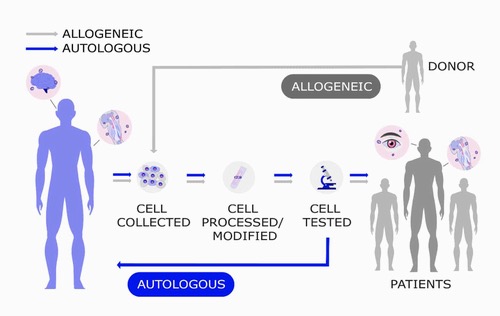
How Cell Therapy Works
Cell therapy is a treatment approach that uses living cells to treat disease. These cells may be obtained from the patient or from a healthy donor and are specially prepared to help the body repair itself, fight disease, or restore normal function. Some cell therapies work by replacing damaged cells, while others help direct the immune system to re-establish balance. As scientific advances continue, cell therapy is creating new opportunities for patients with serious and complex medical conditions.
⸻
How Cell Therapy is Changing Lives
The Lives Touched by Cell Therapy
For many patients and their families, the question “What is cell therapy?” is best answered through personal experience. When all other treatment options had been exhausted, cell therapy offered Emily a new path forward.
More than ten years ago, six-year-old Emily Whitehead became one of the first pediatric leukemia patients to receive CAR-T therapy. Today, over a decade later, Emily remains cancer-free.
Her story demonstrates the remarkable potential of cell therapy to restore hope, health, and new possibilities for patients.
— Emily Whitehead
⸻
What It Takes to Make It Work
From cell collection to patient care, every step in the cell therapy process plays a critical role in determining how effective the treatment will be.
How Patients Receive Cell Therapy
Cell therapy uses living cells to treat disease, but not all therapies work in the same way. Some are made using a patient’s own cells (autologous), while others are derived from healthy donors (allogeneic).
Common approaches include:
• Immune cell therapies such as CAR-T
• Bone marrow and blood stem cell transplantation
• Stem cell therapies that can help repair damaged tissues
Each of these approaches has unique manufacturing and delivery requirements. Many cell therapies require several weeks of production and must be administered within a short time frame under carefully controlled conditions, making scheduling and logistics particularly challenging.
⸻
The Future of Cell Therapy
The reliable and widespread delivery of cell therapies depends on overcoming challenges related to storage, transportation, administration, and scaling the production of both patient-derived and donor-derived products.
Innovative approaches, such as laboratory-generated induced pluripotent stem cells (iPSCs), may enable the development of “off-the-shelf” therapies that are readily available and can reach a much larger number of patient

_1.png)
comment